Updated February 2026
The Rising Demand for Sustainable Delivery in Canada
As awareness of climate change grows, Canadian consumers and businesses are demanding greener logistics solutions.According to a 2021 Newswire Canada report citing Deloitte, 69% of Canadians prefer brands that demonstrate a commitment to environmental sustainability, and delivery emissions are one of the most visible parts of a brand’s footprint.
Transportation accounted for roughly 25% of Canada’s total greenhouse gas emissions in 2023, with freight and commercial delivery contributing a significant piece of that total (Environment and Climate Change Canada, 2024). With eCommerce still expanding and last-mile delivery emissions rising, sustainability is no longer optional — it’s strategic.
The good news: Canada does have sustainable delivery options — and they’re rapidly evolving thanks to technology, government incentives, and innovative carriers. Koorier is part of that movement, helping businesses reduce their delivery carbon footprint while maintaining service performance.
What “Sustainable Delivery” Actually Means
Rather than being a single solution, sustainable delivery is a suite of strategies aimed at reducing environmental impact while preserving speed and reliability. Typical elements include:
- Low-emission fleets (electric vehicles, hydrogen, hybrids)
- Carbon-neutral or offset programs
- Route optimization for fuel efficiency
- Shared delivery infrastructure and micro-hubs
- Green packaging and consolidation strategies
Sustainability isn’t just a marketing slogan — it’s measurable when focused on emissions, energy use, and logistical efficiency.
Canada’s Sustainable Delivery Landscape in 2026
Canada’s regulatory environment and consumer expectations are pushing delivery services toward greener practices. Federal and provincial incentives support EV adoption, and urban centers like Toronto, Vancouver, and Montreal are investing in low-emission zones and EV charging infrastructure.
Summary of Sustainable Delivery Options in Canada
Electric and Low-Emission Fleets: The Backbone of Green Delivery
Electric vehicle (EV) adoption in Canadian logistics has accelerated with federal incentives and charging infrastructure expansion. In 2024, EV registrations in Canada grew by more than 35% year-over-year, particularly among commercial fleets (EV Adoption Canada Report, 2025). Cities like Vancouver have some of the highest commercial EV penetration rates in North America.
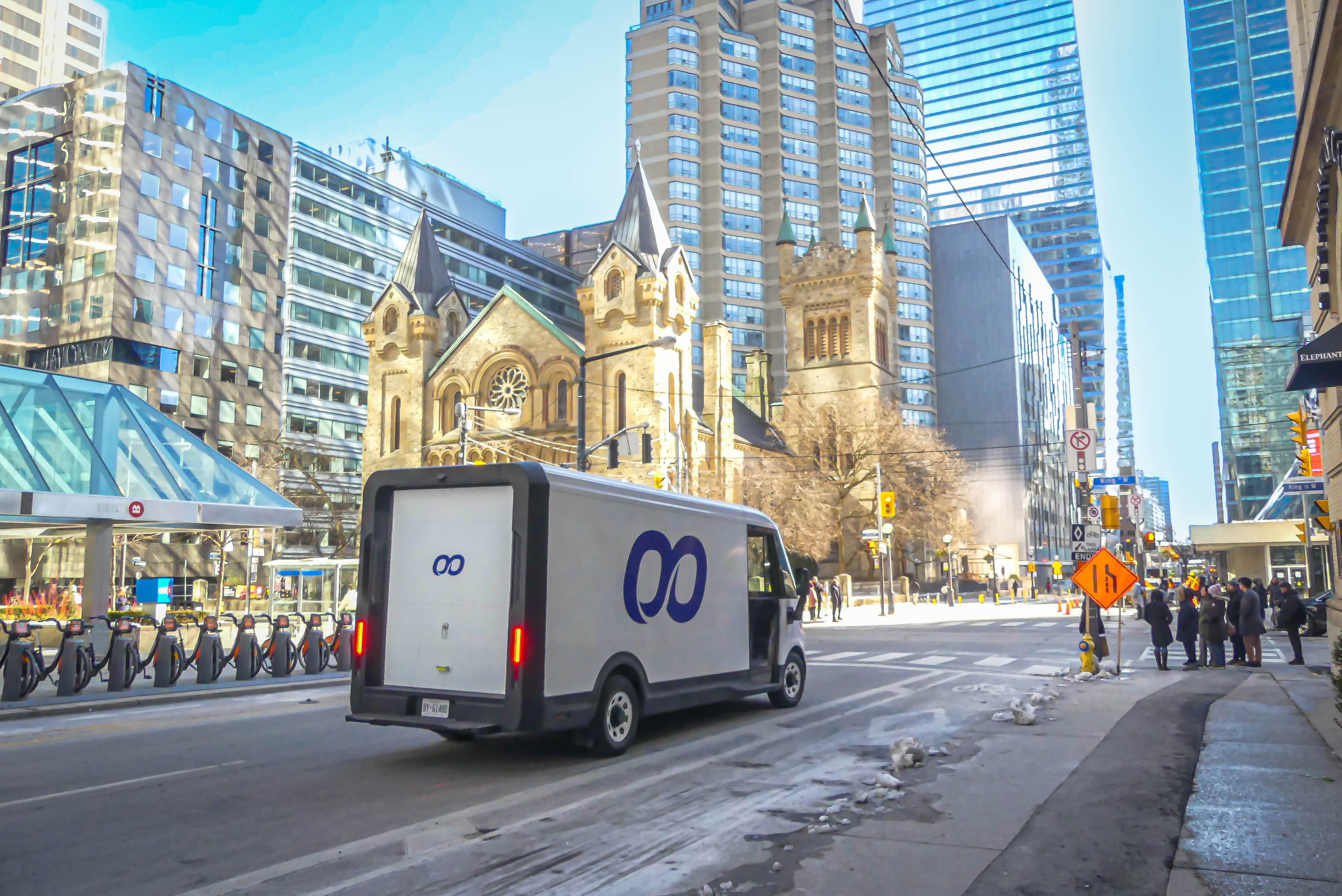
Electric delivery vehicles deliver real environmental impact because they produce zero tailpipe emissions, reducing smog and CO₂ output in urban cores where delivery density is high.
Koorier partners with carriers investing in electric and hybrid vehicles, ensuring that shippers can select low-emission delivery options without compromising ETA reliability.
Carbon-Neutral Shipping and Offsets
Not all emissions can be eliminated immediately — especially for rural or long-distance routes where electrification is still emerging. That’s where carbon-neutral shipping comes in: residual emissions for a delivery are offset through certified projects (like reforestation or renewable energy).
According to the International Carbon Reduction and Offset Alliance (ICROA), certified carbon offsets must be measurable, verifiable, and additional to genuinely counterbalance emissions (ICROA Standards, 2025).
Offering carbon-neutral delivery allows brands to meet sustainability goals while the underlying logistics ecosystem continues to decarbonize.
Route Optimization: A Hidden Sustainability Lever
Efficient routing directly reduces fuel consumption — meaning fewer emissions per delivery. A 2024 study by MIT’s Senseable City Lab found that optimized route planning can lower delivery emissions by up to 25% compared with naïve routing approaches (MIT Senseable City Lab, 2024).
Optimized routing also reduces congestion and driver idle time — two major contributors to urban emissions.
Koorier’s predictive routing algorithms explicitly optimize for fuel efficiency and delivery density, helping Canadian shippers lower emissions without sacrificing on-time performance.
Local Micro-Fulfillment and Urban Hubs
One of the most effective strategies for sustainable delivery in dense Canadian cities is micro-fulfillment — positioning inventory closer to customers in small urban hubs. Micro-hubs shorten trip distances and increase delivery density, which means:
- Lower emissions per stop
- Fewer total miles driven
- Better use of low-emission vehicles
Post-purchase consolidation — grouping deliveries to the same neighborhood — also contributes to sustainability. According to a 2025 McKinsey logistics report, delivery consolidation in urban areas can reduce total emissions by 15-30% compared with individual drop tours (McKinsey, 2025).
Koorier’s platform uses real-time data to batch and consolidate deliveries intelligently, maximizing micro-hub effectiveness.
Sustainable Delivery Options Canada: Order of Trade-offs
Not all sustainable options are equally suitable for every region or business model. Here’s a concise breakdown:
How Koorier Enables Sustainable Delivery for Canadian Businesses
Koorier helps brands implement sustainable delivery without sacrificing reliability:
- Carbon-aware route optimization: Koorier’s algorithms prioritize efficiency and emissions reduction.
- Low-emission carrier selection: Businesses can choose EV-equipped carriers where available.
- Delivery consolidation & batching: Fewer trips, shorter distances, lower emissions.
- Carbon-neutral shipping options: Offset programs available for emissions outside current reduction capabilities.
With this approach, sustainability becomes part of logistics performance — not an add-on.
Final Take
Yes — sustainable delivery options in Canada are real, expanding, and increasingly practical. Whether through electric fleets, carbon-neutral shipping, route optimization, or urban micro-fulfillment, Canadian businesses can reduce their delivery emissions while delighting customers.
What once was a niche offering is now a competitive advantage. And platforms like Koorier make sustainability operational, not aspirational.
Ready to make your delivery operations greener without sacrificing reliability?
Talk to Koorier about building a sustainable delivery strategy — one that improves performance, reduces emissions, and supports your brand’s environmental goals.
Author & Authority
By Giovanna Freitas
Marketing specialist at Koorier
About Koorier
Koorier is a Canadian logistics technology company specializing in regional last-mile delivery networks and real-time delivery visibility for retailers and enterprises.
FAQs: Sustainable Delivery in Canada
Are there truly carbon-neutral delivery options in Canada?
Yes — through certified offset programs paired with efficient routing and low-emission vehicles, deliveries can be carbon-neutral even if electrification isn’t yet available in every region.
Do electric delivery vehicles really make a difference?
Absolutely. When compared with diesel or gasoline fleets, electric vehicles produce zero tailpipe emissions and significantly lower lifecycle emissions when charged with clean energy sources.
Is sustainable delivery more expensive for businesses?
Not necessarily. While some sustainable options (like EV fleets) have higher upfront costs, route optimization and consolidation often save fuel and labor costs, helping offset or exceed the price difference.
Can small businesses access sustainable delivery?
Yes — platforms like Koorier make sustainable options accessible regardless of business size by integrating eco-friendly routing and carrier selection into a single workflow.
How can route optimization reduce emissions?
By planning routes that minimize total distance, avoid congestion, and increase delivery density, routing software directly reduces fuel use and vehicle emissions per stop.


.png)